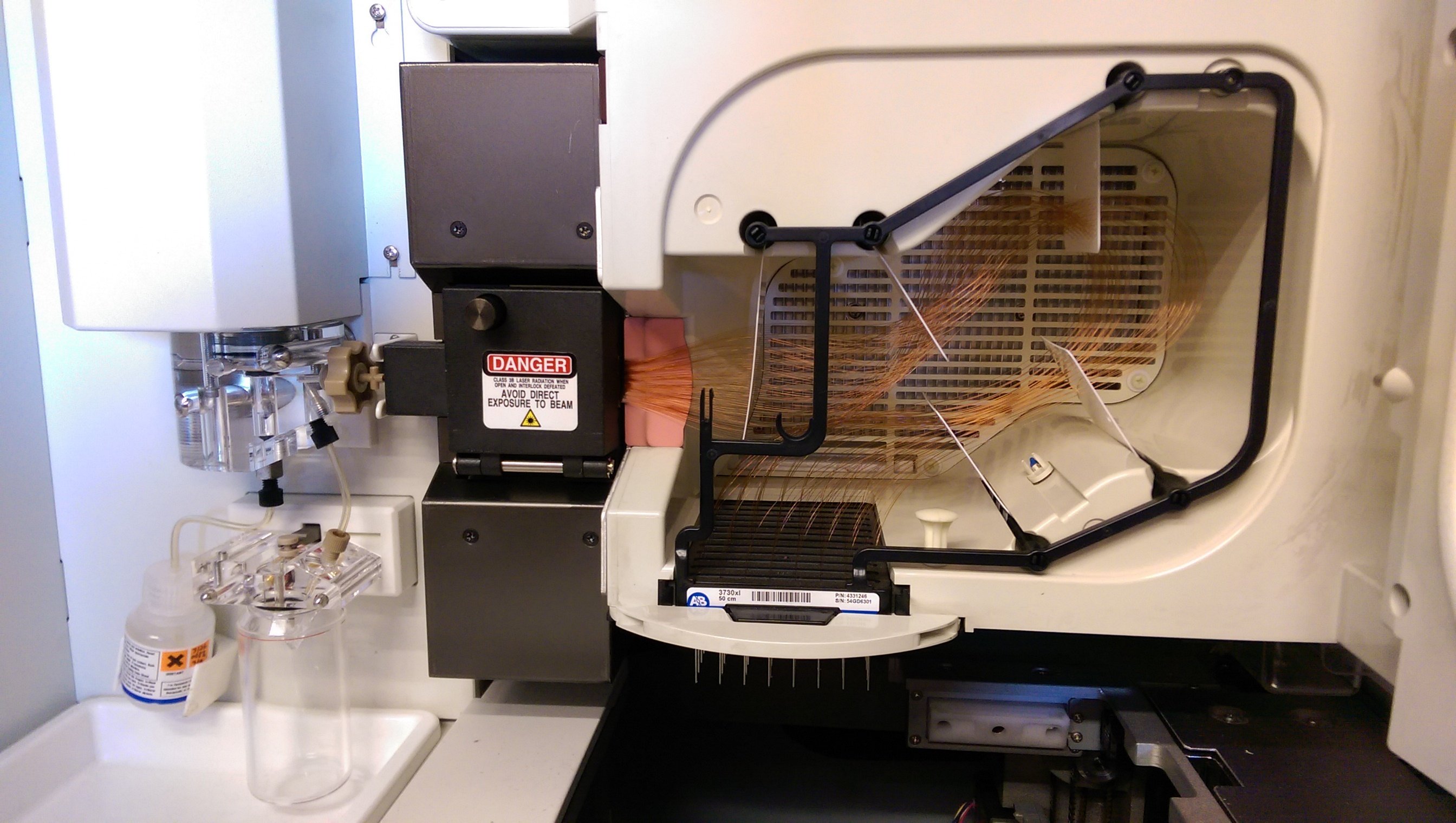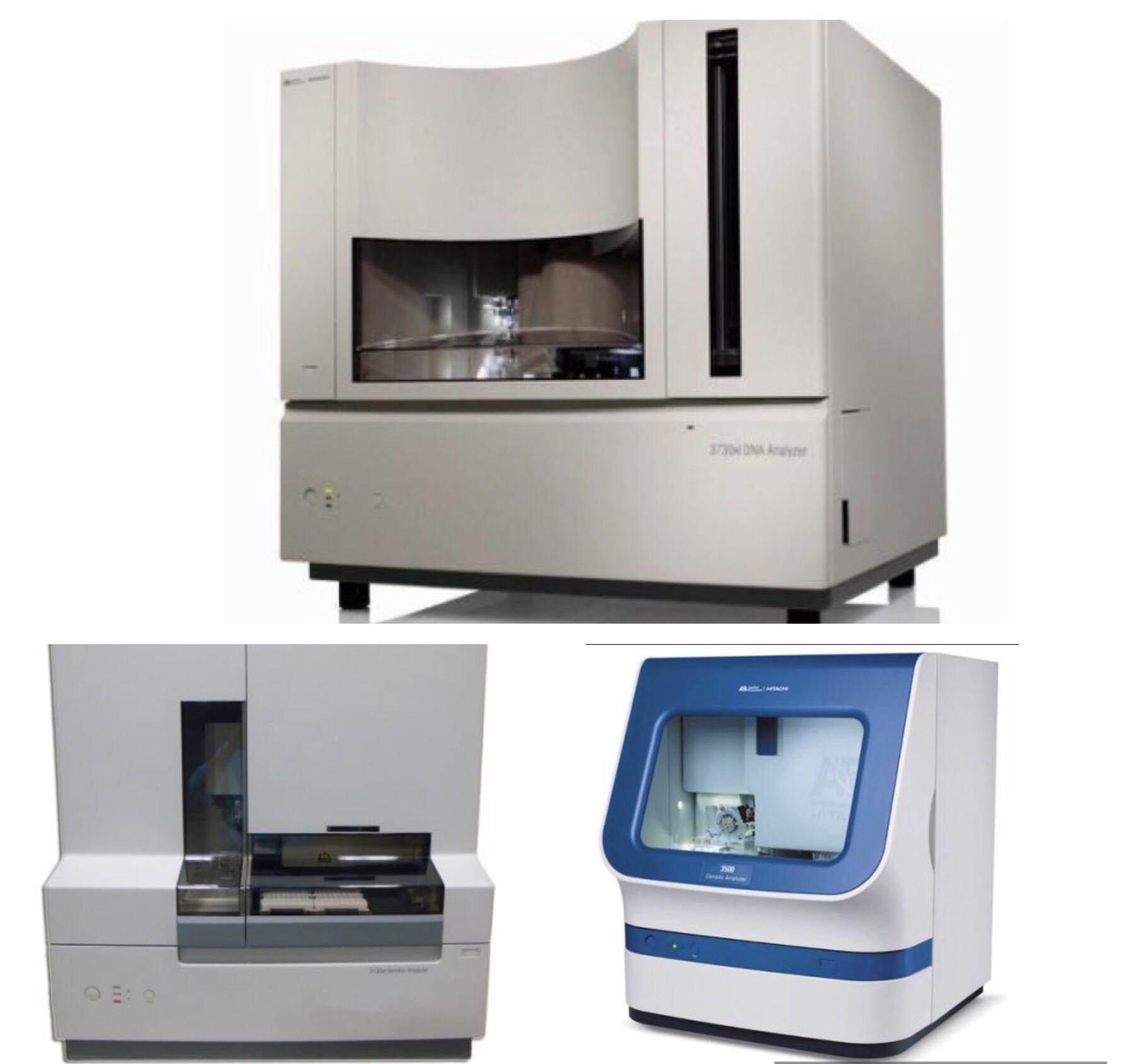
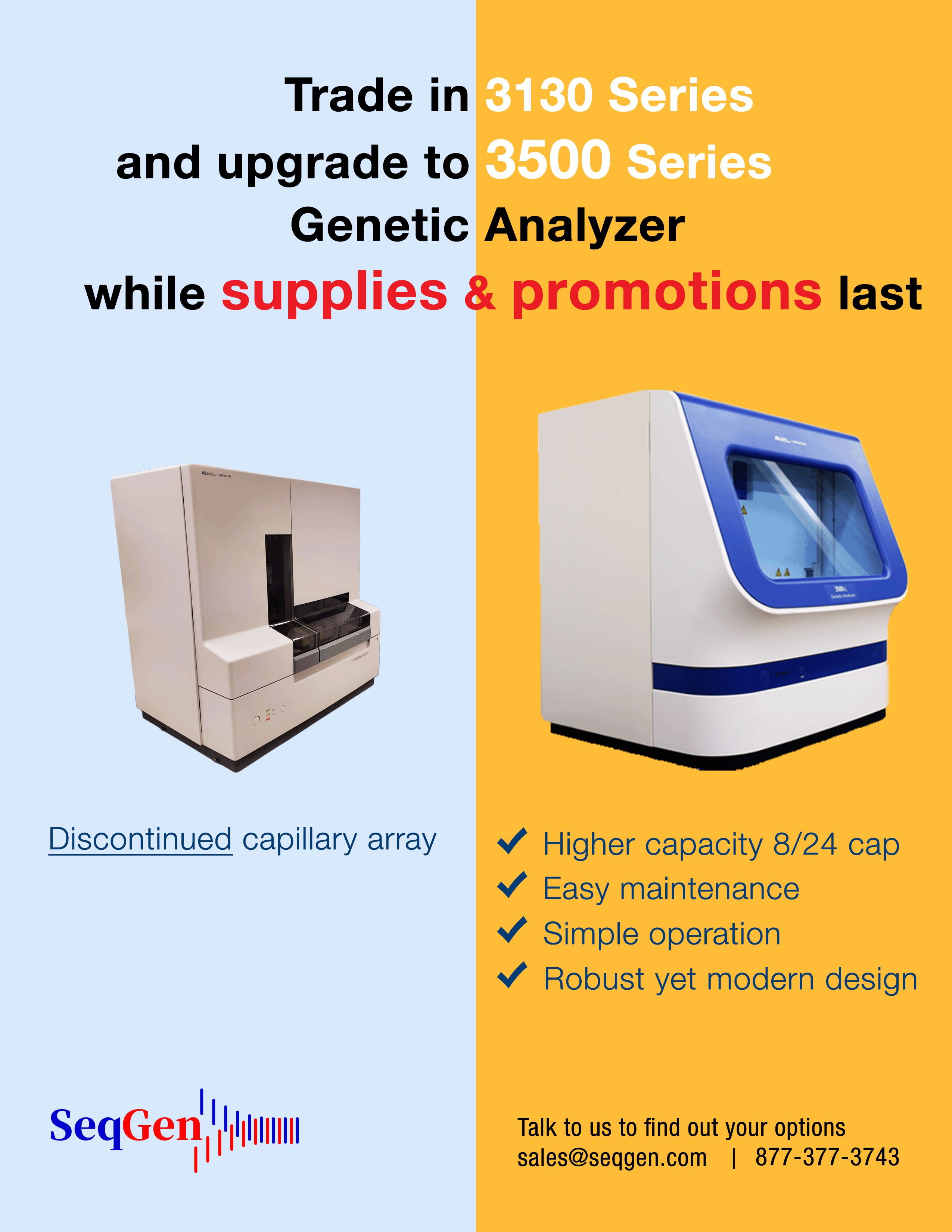
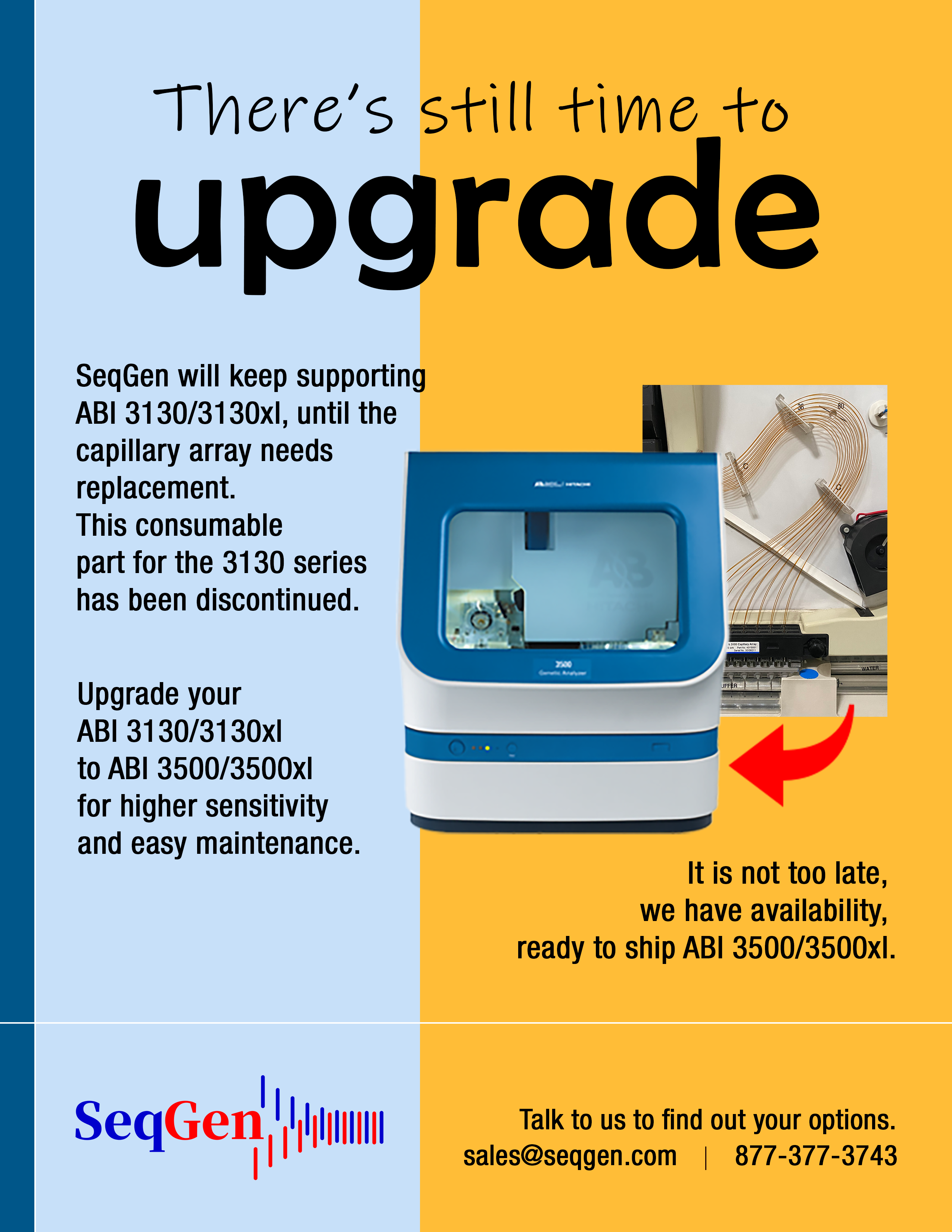
You may already know that Thermo Fisher has discontinued the 3130 Series Genetic Analyzer consumables and no longer offers service for this series. After utilizing your 3130 Series capillary array to its max capacity, exploring alternative options for DNA analyzers is advisable. It would be cost-effective to replace the instrument rather than keep it in your lab.
Winter is almost over, and warm temperatures are slowly coming back. The cold weather lowered my car's tire pressure, and I need to check if the ice has caused any minor damage. It is the perfect time to get my car wheels checked and maintained.
Dear valued customer,
At SeqGen, we constantly look for new ways to improve our customer value and satisfaction. Unfortunately, the rumor has become a reality; Thermo Fisher has announced they will no longer sell consumables, such as the capillary array for your DNA Analyzer, ABI 3130/xl. However, we are reaching out to our loyal customers to let them know SeqGen can help; either from the service standpoint or upgrading your instrument. We are pleased to share that SeqGen has plenty of ABI 3500 and ABI 3500xl on sale.
One of the most common complaints we hear from our customers is they are seeing less than optimal results in their sequencing data. After making sure your machine is working properly, we often come to the conclusion that the issue is related to the capillary array.
Most of the time, the problem is simply a dirty capillary array. Over time, dried and degraded polymer will accumulate on the inner walls of your capillary array. This can adversely affect the resolution during sample runs and cause your results to suffer. Some common symptoms of a failing array are:
- Loss of resolution
- Broadening or “fat” peaks
- Delayed DNA peaks
- Blue or yellow bands in some, but not all of the capillaries
- One or two capillaries showing no peaks at all
You are seeking a DNA analyzer/Sequencer but you are not quite sure which option is best for your needs? We can help! Simply give our sales representative a call to go over the specifications and your preferences to find the perfect match.
I'm taking a step back in time from our technology-driven culture. I have been, for the past two weeks, living like a pioneer. Ok, more like a part-time pioneer. My refrigerator decided to throw in the towel and call it quits three days before Easter. Before finally calling a technician for help, I tried the standard troubleshooting process, hoping it would provide resolution.
Spring is officially here, and that means more sunlight to enjoy outside. With that in mind, I made a comment to my loving husband. Our deck's wooden boards have started to show the effects of seasonal heat, rain, and snow through the years. To prevent further damage, I suggested that we replace the decayed boards now and consider switching to composite in the future. And with that, I was off to CrossFit. I was only gone for an hour, but upon my return, I was shocked to find my deck was no more! In only 60 minutes, my husband and father-in-law had removed the surface boards to discover there was deeper decay in the support beams. Sometimes, the real issue isn't visible on the surface. You have to tear away the top layer to find the underlying problem.
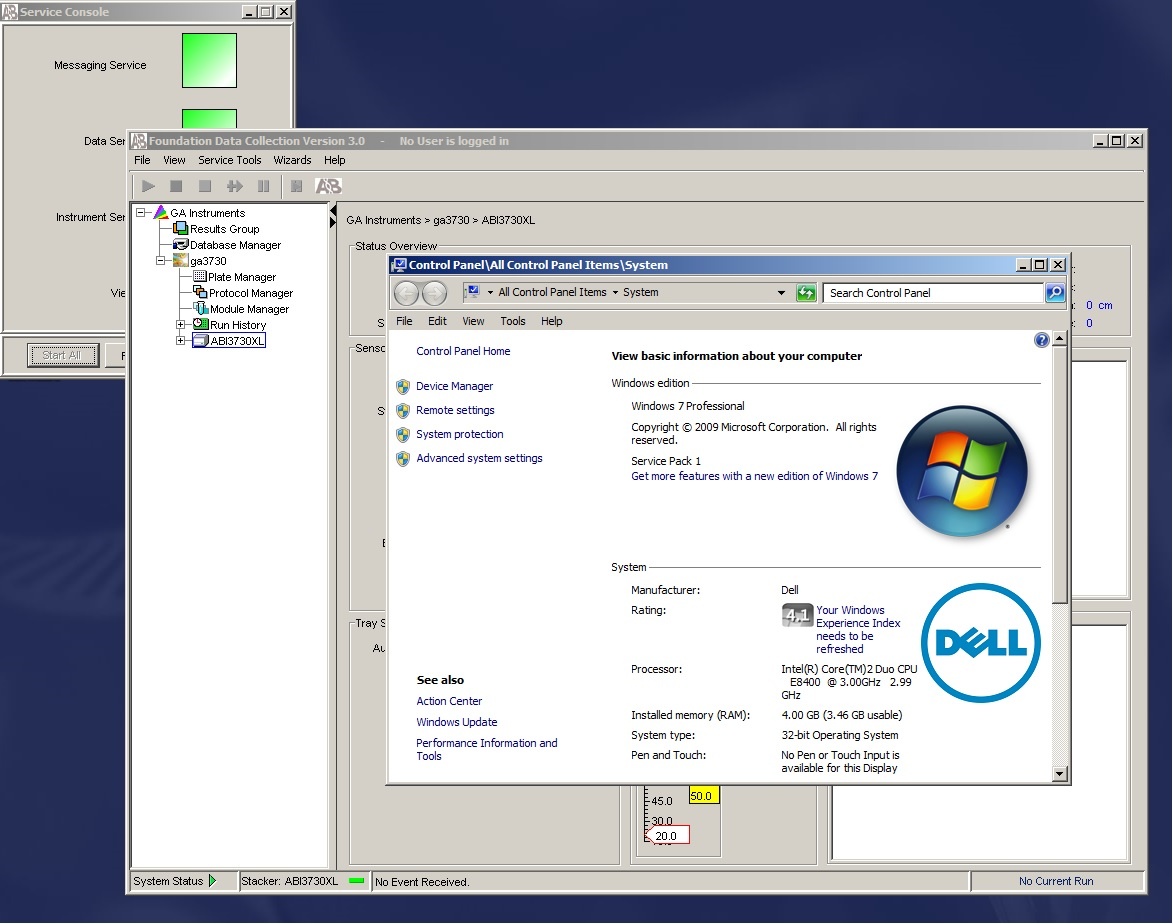
SeqGen is incredibly dedicated to its customers and their machines. Your concerns are our concerns. We have recieved many emails and phone calls from our customers asking whether they have to upgrade their sequencing and fragment analysis software to work on the Windows 7 operating system. Like many major updates to these machines, this maintenance can be rather pricey. Before you write that check, you’ll want to make sure you actually need the update.
Maybe it’s my obsessive behavior or maybe I’m paranoid, but as the seasons change, I feel the need to do thorough preparation on the home front. I pull out my trusty checklist of required maintenance and cleaning, then get to work.
As the day wanes on, I find myself wondering, “What’s the point? Why do I exhaust myself fixing things that aren’t broken yet?” But then I remember Murphy’s Law – whatever can go wrong, will go wrong. If you simply anticipate and prepare for those inevitable little disasters, you can significantly reduce the amount of chaos you’ll have to deal with later.
Not too long ago, I decided to switch phones. It should have been a simple process. Buy the new device, take it home, transfer my data, and carry on. But this time, something went wrong. Eager to start using my shiny new toy, I completely forgot to back up my data on the cloud. And as a result, I lost everything: my notes, my contacts, and several years’ worth of important data. When my cell phone rings now, I’m always left wondering – is this a friend or a pesky solicitor?